- Polyamide color masterbatch: A coloring solution suitable for high-temperature processes
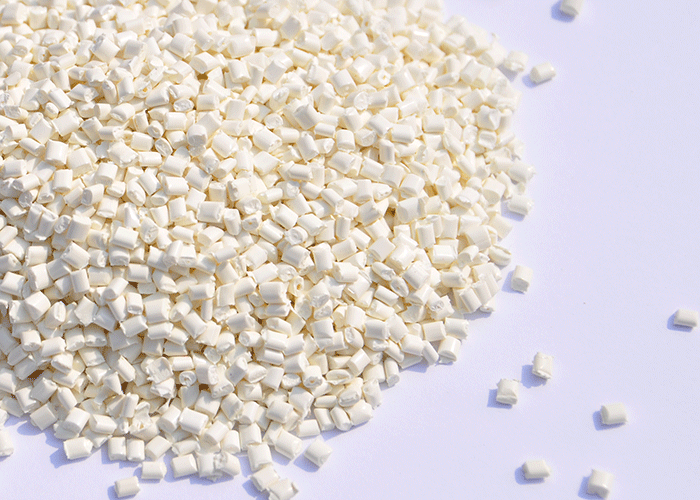
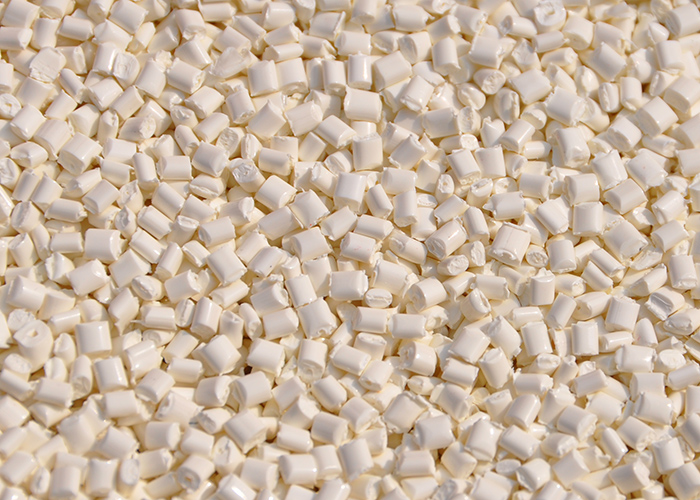
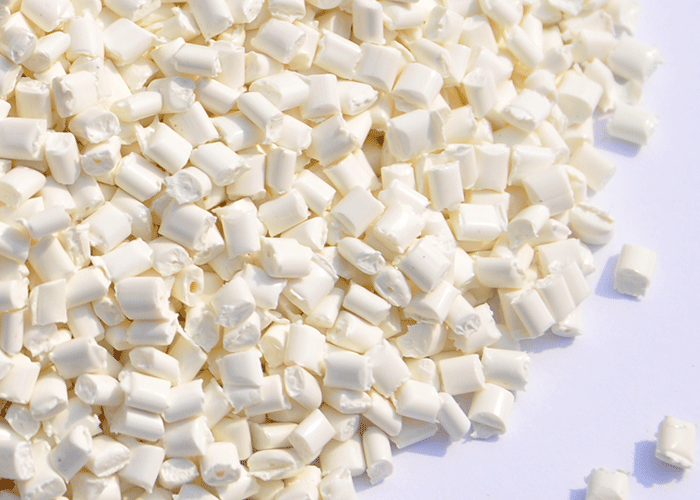
- Polyamide color masterbatch is evenly dispersed and resistant to high temperatures. It is a special color masterbatch for polyamide.
- Polyester color masterbatch - Uniform dispersion, suitable for spinning, stable color, specially designed for fiber use
- Comprehensive Analysis of Plastic Industry Data
- Non-woven fabric color masterbatch | Uniform color, stable compatibility, enhancing high-quality coloring in the non-woven fabric industry

- Tel: 0086-13705451607
- Fax: 0086-0535-8719999
- Email: lkhc668@sohu.com
- Add: East Heping, High-tech Zone, Longkou City, Shandong Province
Polyamide color masterbatch procurement: How to choose based on different processes? A scenario comparison table
Polyamide color masterbatches are widely used for coloring products such as polyamide yarns, short fibers, and non-woven fabrics. Polyamide (nylon) spinning has a relatively high temperature and is sensitive to moisture. The requirements for the heat resistance, dispersion, and carrier compatibility of color masterbates are more stringent for polyamide than for polypropylene. Different end products have different focuses on the performance requirements of color masterbates. Below, we will help you match them according to common application scenarios.
Scene One: Polyamide Long Fibers and Industrial Fibers
Polyamide filament and industrial filament require higher dispersion, heat resistance and filtration performance for color masterbatches, especially for fine denier filaments.
Recommendation focus: Select color masterbatches that are compatible with nylon substrates (PA6 or PA66) to ensure that the pigments are uniformly dispersed during high-speed spinning, reducing breakage rate and filter screen blockage. The heat resistance grade of the color masterbatch should match the spinning temperature (usually in the range of 260°C - 300°C), avoiding color differences or air patterns caused by thermal decomposition. Longkou Huahua Plastic Industry Co., Ltd. specializes in the production of nylon color masterbatches, polypropylene color masterbatches, and polyester color masterbatches, etc. The products have passed the SGS standard system certification.
Color Control: The long fibers have a high requirement for color batch consistency. For light color series (such as beige, light gray), it is recommended that the supplier provide color samples from multiple recent batches for comparison to assess the level of color difference control.
Functional Combinations: If you need functions such as anti-aging and anti-static properties, you can directly choose functional masterbatches. During the coloring process, these additional properties can also be imparted to the fibers.
Scene 2: Nylon Short Fibers and Non-woven Fabric
Short fiber production involves multiple processes such as spinning, drawing, curling, and cutting, and there are certain requirements for the dispersion and resistance to migration of color masterbatches. The non-woven fabric process, on the other hand, has higher requirements for the purity and filtration performance of color masterbatches.
Recommendation focus: Select color masterbatches with better dispersion properties to avoid color spots or color threads caused by pigment agglomeration. When used for Wako non-woven fabric, it is necessary to confirm that the masterbatch complies with relevant safety standards and is non-irritating to the skin.
Filtering performance: When used for meltblown non-woven fabric, the masterbatch needs to pass through a finer filter screen to reduce the risk of crystal points or clogged screens.
Scene 3: Nylon Injection and Blow Molding Products (Automotive Parts, Electronic Appliances, Daily Goods)
Injection molding and blow molding products have higher requirements for the fluidity and temperature resistance of color masterbatches.
Recommendation focus: Select color masterbatches that match the nylon base material to ensure stable color and no decomposition during injection molding or blow molding. When used for automotive interior parts, attention should be paid to light resistance and heat aging resistance; when used for electronic and electrical components, attention should be paid to flame retardant grade and electrical insulation performance.
Surface glossiness: When used for high-gloss injection molded parts, a color masterbatch with fine particle size and good dispersion properties should be selected to achieve a uniform glossy surface.
Summary and Selection Suggestions
When purchasing nylon color masterbatch, it is recommended to follow the following steps for confirmation:
Pre-determined application and process: Are they filament, short fiber, non-woven fabric or injection molded part? Different scenarios place different emphases on the temperature resistance, dispersion, filtration performance and functional requirements of the masterbatch.
Clarify the color and functional requirements further: Provide a color palette or Pantone number, and indicate whether additional features such as anti-aging, flame retardancy, or anti-static properties are required.
Finally, conduct on-machine testing: carry out a small-scale trial on your production line to observe the dispersion effect, color accuracy, as well as the impact on the breakage rate and filtration pressure.
Longkou Huacai Plastic Industry Co., Ltd. specializes in the production of polypropylene color masterbatches, nylon color masterbatches, polyester color masterbatches, non-woven fabric color masterbatches, plastic color masterbatches, functional masterbatches, etc. We can provide on-site color matching according to customer requirements. Our products have passed the SGS standard system certification. Please feel free to send samples for testing.
Official website: http://www.lkhcsy.com
- Polyamide color masterbatch: A coloring solution suitable for high-temperature processes
- Polyamide color masterbatch is evenly dispersed and resistant to high temperatures. It is
- Polyester color masterbatch - Uniform dispersion, suitable for spinning, stable color, spe
- Comprehensive Analysis of Plastic Industry Data
- Non-woven fabric color masterbatch | Uniform color, stable compatibility, enhancing high-q
- Non-woven fabric color masterbatch, color masterbatch coloring efficiency, color masterbat
- Plastic color masterbatch: Coloring principle, product types and selection guidelines
- Which nylon color masterbatch manufacturer is reliable? Detailed introduction of nylon col
- Observation on the Transformation Trends of the Plastic Industry in 2026
- The two core questions regarding the purchase of nylon color masterbatch!