- Can polyester color masterbatch and polypropylene color masterbatch be used interchangeably? What are the differences?
- Why are polyester color masterbatches divided into injection molding grade, spinning grade, and film grade?
- The development of the plastic industry from January to October 2026
- Polypropylene color masterbatch offers uniform coloration and strong stability.
- Polyamide color masterbatch: A coloring solution suitable for high-temperature processes

- Tel: 0086-13705451607
- Fax: 0086-0535-8719999
- Email: lkhc668@sohu.com
- Add: East Heping, High-tech Zone, Longkou City, Shandong Province
Dry Goods for Polyester Filament Production: How to Select Stable and Effective Polyester Color Masterbatches
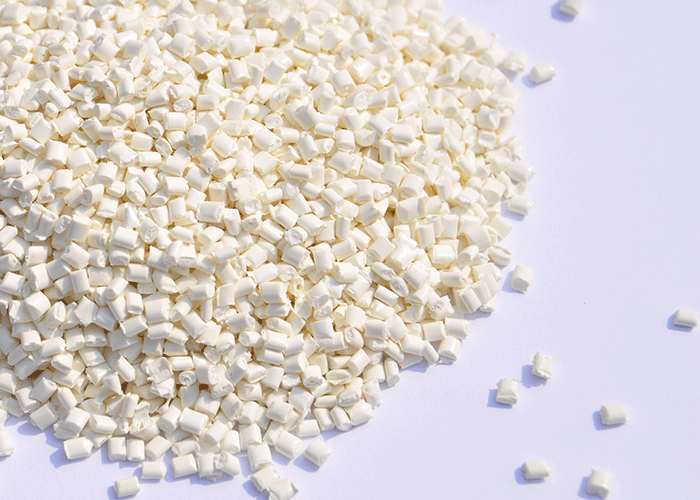
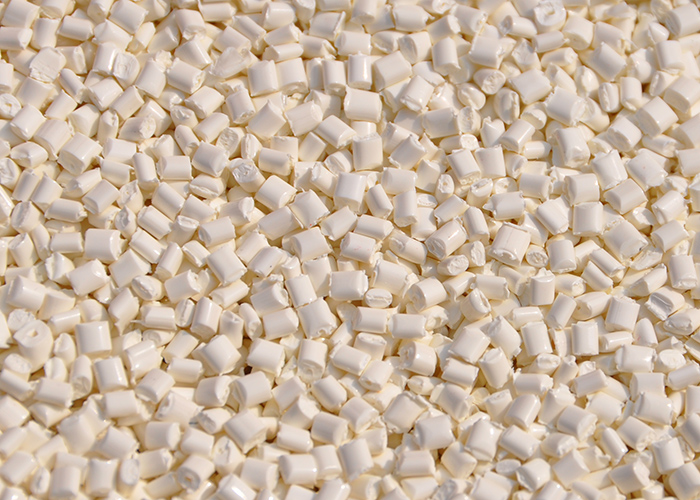
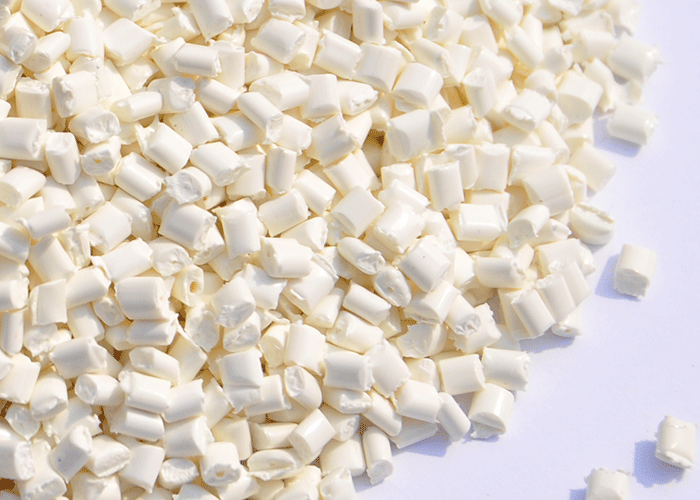
Polyester color masterbates are used for coloring polyester filament, staple fiber, non-woven fabric and other products. The spinning temperature of polyester is relatively high (usually ranging from 280℃ to 300℃). Many purchasers often encounter confusion when selecting models: for the same polyester color masterbatch, why do some spinning processes have more mesh blockages and breakages, while others are smooth and stable? Let's start from two common issues to help you clarify the selection.
1. Thermal Resistance: Why do some fibers of the same color "clog" while others don't?
The spinning temperature of polyester fibers is high, and the heat resistance of color masterbatches is one of the key indicators determining whether they can be used smoothly.
Paint temperature resistance grade: The upper limit of heat resistance varies greatly for different paint varieties. For color masterbatches used in polyester filament spinning, the selected paint varieties must be stable, non-decomposing, and non-migrating within the temperature range of 280°C - 300°C. If the paint has insufficient temperature resistance, it will decompose during the spinning process, generating gases (causing bubbles, breakage) or forming carbon compounds (causing clogging of the screen, color change). When purchasing, you can inquire with the supplier whether the paint system used has been screened for compatibility with the polyester high-temperature process.
Heat resistance of additives: The dispersants, lubricants and other additives in color masterbatches also need to remain stable at high temperatures. Additives that are not heat-resistant will volatilize or carbonize at the spinning temperature, which will lead to an increase in filtration pressure, an increase in breakage rate, and even contamination of the hot rolls.
Temperature resistance verification method: It is recommended to request samples before procurement. Conduct a small-scale test at your own spinning temperature to observe changes in component pressure, breakage rate, and the color uniformity of the finished fibers. Longkou Huahua Plastic Industry Co., Ltd. specializes in the production of polyester color masterbatches. The products have passed the SGS standard system certification and can be matched with appropriate temperature resistance grades according to the process.
II. Carrier and Dispersion: Why does the color match, but the spinning still gets stuck in the screen?
Color matching is only the first step. Carrier compatibility and dispersion are the key factors determining the smoothness of spinning.
Carrier matching: The carrier resin of the polyester color masterbatch should be compatible with the polyester substrate (PET). If the carrier is not compatible with the substrate, incompatible gel particles will be generated during melt spinning, which will clog the filter screen, accelerate the pressure rise of the components, and even cause breakage of the spinning. When purchasing, inform the supplier of your spinning process type (FDY, POY, short fibers, etc.) so that a suitable carrier can be matched.
Dispersion: The dispersion state of pigments in color masterbatches directly affects the filtration performance of spinning. If there are agglomerated particles of pigments, they will be intercepted when passing through the filter screen of the spinning component, resulting in a rapid increase in pressure. When purchasing, you can inquire with the supplier whether dispersion tests (such as the pressure filtration value DF value test) have been conducted, and request relevant data as a reference for selection.
Batch stability: The color and dispersion stability between batches of polyester color masterbatches also deserve attention. Before purchasing, it is recommended to ask the supplier to provide color sample comparisons and filtration performance data from multiple recent batches to assess the batch consistency.
Summary and Selection Suggestions
When purchasing polyester color masterbatch, it is recommended to follow the following steps for confirmation:
Provide process parameters: Inform the supplier of your spinning temperature, speed, and filtration accuracy (mesh count) so that they can match the appropriate temperature resistance grade and dispersion fineness.
Request data on temperature resistance and filtration performance: Require the supplier to provide information on the temperature resistance level of the pigment and test data on dispersion (such as filter press values).
Sample machine testing: Before the full-scale production, conduct actual testing on your own production line with small batches. Observe changes in filtration pressure, breakage rate and color uniformity. Confirm stability before increasing the order size.
Longkou Huacai Plastic Industry Co., Ltd. specializes in the production of polypropylene color masterbatches, nylon color masterbatches, polyester color masterbatches, non-woven fabric color masterbatches, plastic color masterbatches, functional masterbatches, etc. We can provide on-site color matching according to customer requirements. Our products have passed the SGS standard system certification. Please feel free to send samples for testing.
Official website: http://www.lkhcsy.com
- Can polyester color masterbatch and polypropylene color masterbatch be used interchangeabl
- Why are polyester color masterbatches divided into injection molding grade, spinning grade
- The development of the plastic industry from January to October 2026
- Polypropylene color masterbatch offers uniform coloration and strong stability.
- Polyamide color masterbatch: A coloring solution suitable for high-temperature processes
- Polyamide color masterbatch is evenly dispersed and resistant to high temperatures. It is
- Polyester color masterbatch - Uniform dispersion, suitable for spinning, stable color, spe
- Comprehensive Analysis of Plastic Industry Data
- Non-woven fabric color masterbatch | Uniform color, stable compatibility, enhancing high-q
- Non-woven fabric color masterbatch, color masterbatch coloring efficiency, color masterbat